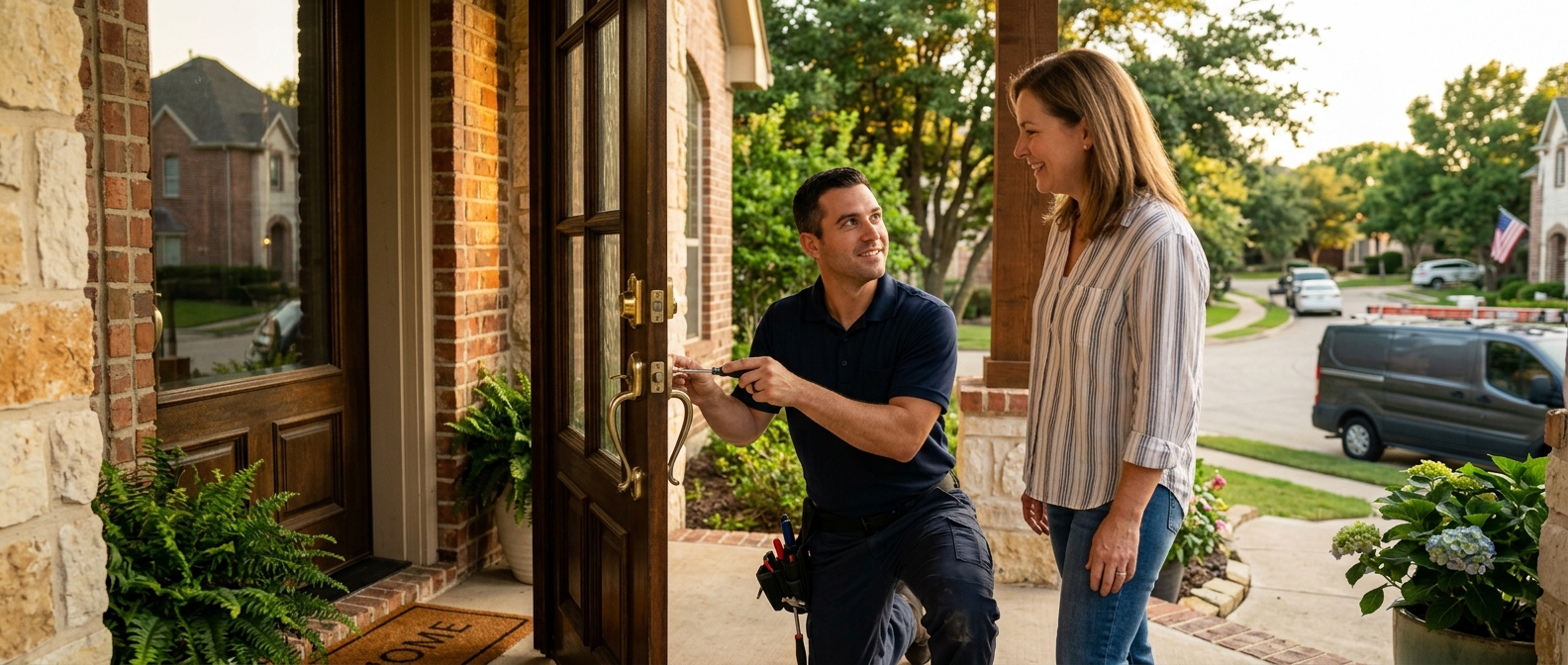
Short answer: The best time to find a reliable locksmith is before you're standing in the driveway at midnight. Here's how to vet one properly, including what "licensed" really means in Texas, which surprises most people, and the questions that separate a real pro from a call-center dispatch.
The best time to find a reliable locksmith is before you're standing in the driveway at midnight. Here's how to vet one properly, including what "licensed" really means in Texas, which surprises most people, and the questions that separate a real pro from a call-center dispatch.
Here's what trips people up. As of this writing, Texas does not require a statewide license to work as a locksmith. The state's locksmith licensing program was eliminated in 2019, so unlike an electrician or a plumber, a Dallas locksmith generally isn't working under a state license at all. Rules can and do change, so it's always worth confirming the current requirement for yourself, but the practical takeaway is that a flashed "license number" proves far less here than most customers assume. An operator who leans hard on an official-sounding, unverifiable credential may be counting on you not knowing that, which is all the more reason to judge them on things you can actually check.
With statewide licensing off the table, the signals that actually mark a trustworthy locksmith carry more weight. Ask whether they carry general liability insurance and can show proof of it, because that's what protects your property if something goes wrong during the work. Bonding is a further plus. Professional credentials such as membership in the Associated Locksmiths of America (ALOA) or manufacturer certifications point to someone who invests in the craft rather than just chasing calls. Then verify a real presence: a physical address, a business name that stays consistent everywhere it appears, and a genuine track record. Read reviews for specific details rather than star counts. A wall of identical, five-word raves all posted the same week is a redder flag than a handful of honest, mixed ones.
You can screen most operators in a two-minute phone call. What is your company's legal name? Are you insured? Can you give me an all-in estimate with the trip fee included? Will the technician arrive in a marked vehicle, show ID, and leave an itemized invoice? Do you attempt non-destructive entry before reaching for a drill? A real locksmith answers all of these without flinching, because they're exactly the questions they'd want asked if the roles were reversed. Vague, evasive, or irritated answers are themselves the answer, and they tell you to keep dialing until you reach someone who welcomes the scrutiny.
Here's what trips people up. As of this writing, Texas does not require a statewide license to work as a locksmith. The state's locksmith licensing program was eliminated in 2019, so unlike an electrician or a plumber, a Dallas locksmith generally isn't working under a state license at all. Rules can and do change, so it's always worth confirming the current requirement for yourself, but the practical takeaway is that a flashed "license number" proves far less here than most customers assume. An operator who leans hard on an official-sounding, unverifiable credential may be counting on you not knowing that, which is all the more reason to judge them on things you can actually check.
With statewide licensing off the table, the signals that actually mark a trustworthy locksmith carry more weight. Ask whether they carry general liability insurance and can show proof of it, because that's what protects your property if something goes wrong during the work. Bonding is a further plus. Professional credentials such as membership in the Associated Locksmiths of America (ALOA) or manufacturer certifications point to someone who invests in the craft rather than just chasing calls. Then verify a real presence: a physical address, a business name that stays consistent everywhere it appears, and a genuine track record. Read reviews for specific details rather than star counts. A wall of identical, five-word raves all posted the same week is a redder flag than a handful of honest, mixed ones.
You can screen most operators in a two-minute phone call. What is your company's legal name? Are you insured? Can you give me an all-in estimate with the trip fee included? Will the technician arrive in a marked vehicle, show ID, and leave an itemized invoice? Do you attempt non-destructive entry before reaching for a drill? A real locksmith answers all of these without flinching, because they're exactly the questions they'd want asked if the roles were reversed. Vague, evasive, or irritated answers are themselves the answer, and they tell you to keep dialing until you reach someone who welcomes the scrutiny.
Call (469) 607-2770 and describe the situation, your exact location, and what you need. Timing is confirmed on that call rather than promised in advance.
Call for help: (469) 607-2770 — a straight answer and an honest estimate before any work begins.